Healthy people
Stronger Communities
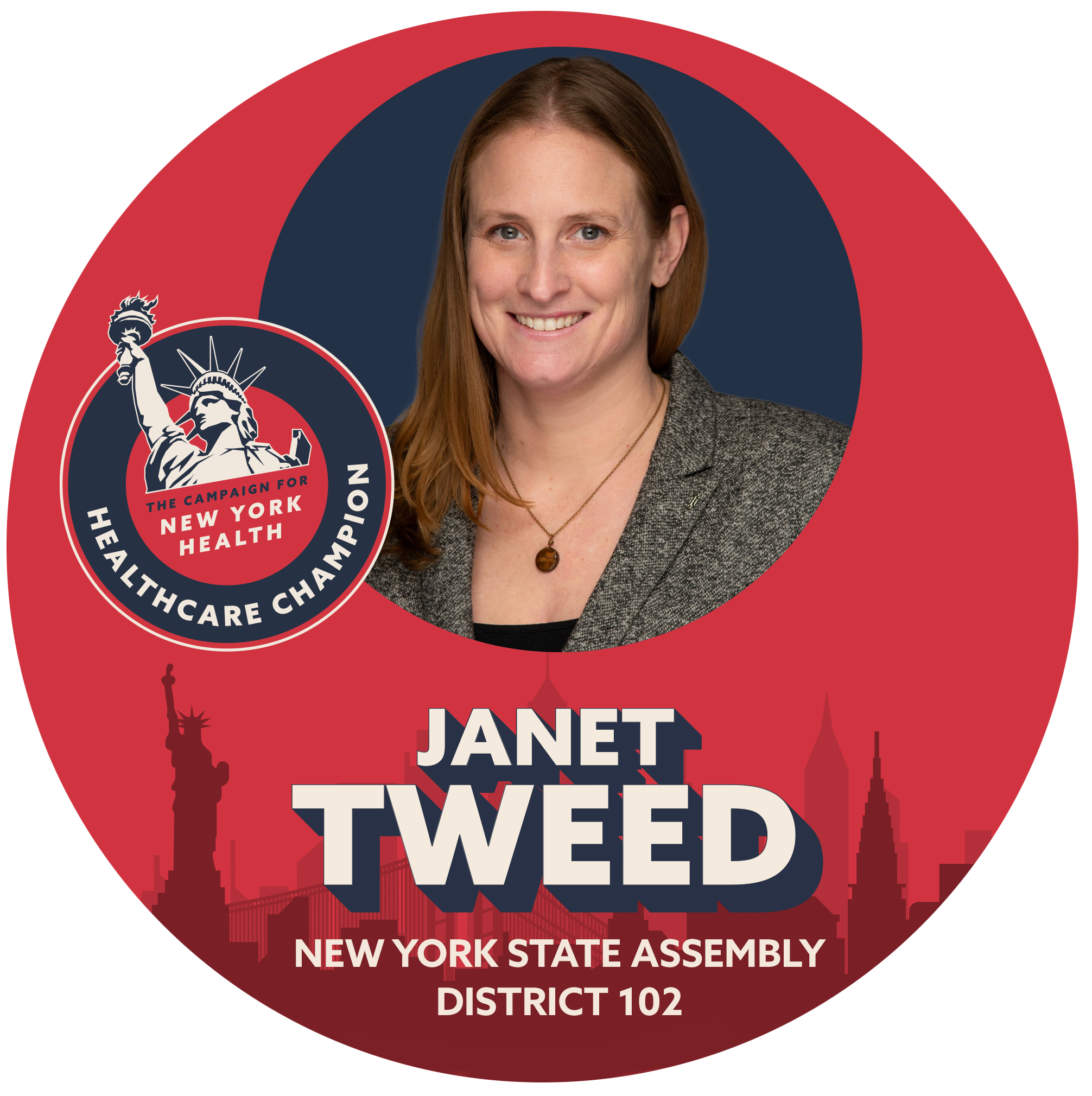
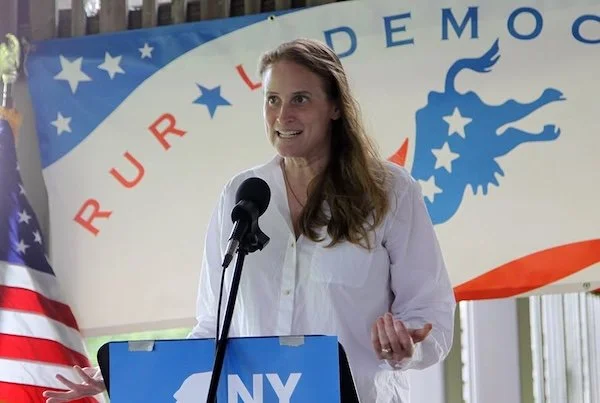
Janet Tweed for NYS Assembly 102
Janet is a physical therapist who’s spent her career helping people regain strength and independence.
A mom, Rotarian, and village trustee, she brings compassion, service, and common sense to everything she does.
Janet’s on-the-ground healthcare experience gives her a real understanding of how policy affects people’s lives, and she’s ready to take that practical perspective to Albany to tackle challenges like healthcare, housing, utility costs, and the environment.
Hi, I'm Janet Tweed
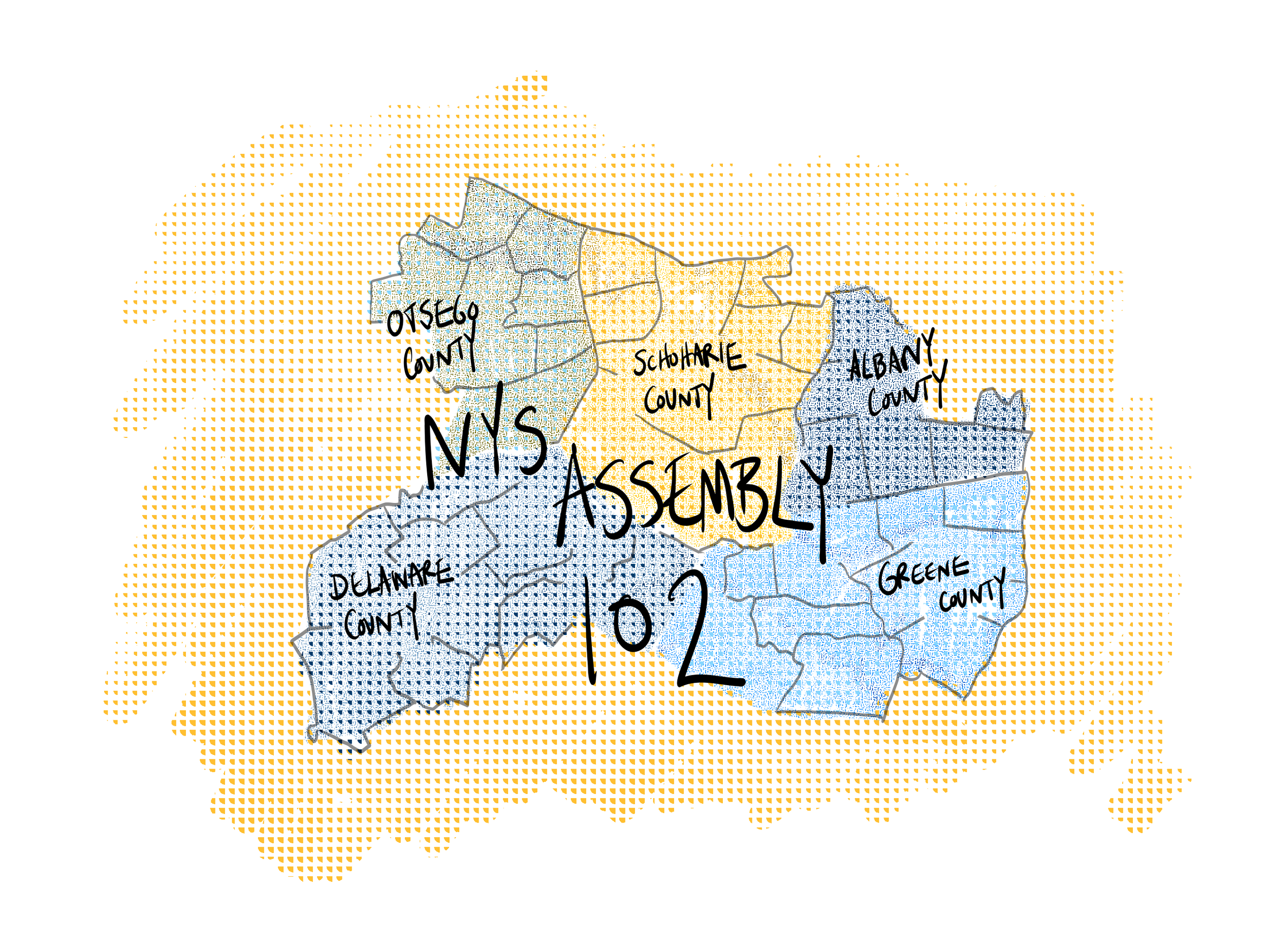
I'm running for Assembly District 102.
I grew up in a rural community playing sports that led to my career as a physical therapist. I love being a physical therapist because I get to help people.
When I settled in Delhi. I found other ways to help people and my community, first as a volunteer and then as an elected official.
I'm running for assembly for three main reasons: to improve our health care, supporting the New York Health Act, as well as our health care systems and helping people age in place. Infrastructure – actively working to support healthy infrastructure throughout New York. And lastly, protecting our communities and protecting the Constitution.
I'm running for Assembly because I think that this district deserves to have a voice, someone who actually works to make changes that affect our daily life.
Support Tweed for NYS 102. Donate Today.
Our campaign is powered by support from people like you
My
Game Plan
-
A healthy society is fundamental to our economy and our democracy. Here in the United States, we pay more per person for our healthcare system than any other country. We pay twice as much as other wealthy countries. We are also the only developed country in the world that does not guarantee its citizens universal healthcare. This is an economic failing and a moral failing. And it only exists because the current system is designed to benefit profits, not people.
The problems we face are not inevitable and we can fix them. Even without action by the federal government, there are things we can do here in New York to improve healthcare affordability and accessibility. To name a few:
Pass the New York Health Act and ensure universal healthcare for all New York residents – including dental, vision and long-term care – with no deductibles or co-pays. An estimated 90% of New Yorkers would pay less for this system than they are currently paying. The very highest income earners would pay somewhat more, but even those earners would benefit from living in a society where – even if they lose that high-paying job – they will never go bankrupt because of a medical emergency.
Even without the NY Health Act, there are things we can do to improve healthcare affordability and accessibility. For example, let's expand Medicaid eligibility. I've worked with patients on Medicaid who have to carefully track how many hours they work or turn down raises so they don't go over the extremely low Medicaid income thresholds, because their chronic, expensive health conditions would bankrupt them without Medicaid. We shouldn't be punishing people who want to get ahead by threatening to take away their insurance. Until we can achieve full universal healthcare for all, New York could expand Medicaid eligibility ourselves.
In parts of the 102nd district, we are fortunate to have school-based health clinics that offer services to all students – including well visits, dental check ups, and mental healthcare – free of charge. Let’s expand that wonderful service statewide. School facilities already exist, so this would not require massive capital expenditures, but would benefit many, many children.
As we who live in the rural parts of the 102nd district know, it is sometimes very difficult to access healthcare, even when we have the means to do so. It is not uncommon for people in our district to travel 2-4 hours to receive specialist care. Let’s incentivize in-demand healthcare providers to work in our area by offering student debt relief for those who work in underserved areas, like our rural area, for five years.
Read more about how our healthcare policies should be led by science and not social media influencers in my op-ed in the Oneonta Daily Star.
-
Safe, sufficient and affordable infrastructure is key to economic development and quality of life. Janet supports increasing housing stocks of all types; lowering energy costs through better regulating NYSEG and AI data centers and thoughtfully increasing renewable energy infrastructure; and changing the way Albany distributes funding to be more equitable for small rural communities like ours.
-
None of us are free until all of us are free. We’re witnessing unprecedented attacks on our rights and freedoms. As a member of the Assembly, I will protect women’s right to choose, LGBTQ+ folks’ right to live freely and without fear, citizens’ right to vote without political interference, and every person’s right to due process, a fair and speedy trial, and freedom from unreasonable search and seizure.
Attacks on our neighbors by ICE are particularly horrific and unjust. If we truly care about people obeying the law and doing things the right way, we must insist that these standards also apply to our government.
As part of my role on the Delhi village board, I serve on the police committee. I have the utmost respect for police officers who protect and serve our communities in accordance with the law, under the Constitution. ICE under the current administration is regularly breaking the law, undercutting the Constitution, and threatening public safety.
A conservative federal judge compiled a record of 96 court orders that ICE illegally violated, just in January of this year. Hundreds of judges have ruled ‘more than 4,400 times since October that the current administration is detaining immigrants unlawfully,’ according to a Reuters investigation. ICE tactics, especially wearing of masks and refusal to wear identification, are inspiring a wave of criminal copycats – a problem so severe that the FBI has issued a public statement urging ICE to stop these practices and follow normal law enforcement procedures followed by every other agency (including ICE, pre-Trump). A former ICE attorney testified before Congress that he was secretly ordered to train new agents to ignore constitutional protections and enter private homes without judicial warrants. These tactics make us all less safe and less free. Law enforcement officers must obey the law themselves, or we are not a free country.
-
Supporting seniors to age in place – safely and with dignity – is one of my top priorities as a candidate for New York State Assembly.
I worked for several years as a traveling, home-care physical therapist. I was working primarily with seniors who were trying to recover at home after a serious injury or illness. In that role, I saw just how important the full social safety net was in enabling seniors to stay in their homes as they age. Some folks needed adaptations to their homes to allow for a walker or wheelchair. Some relied on Meals on Wheels or SNAP to meet their nutritional needs.
All of them required Medicare, and some lower-income seniors were also enrolled in Medicaid. In my view, supporting these programs is one of the ways that we honor our elders. I want my tax dollars going to support programs like this. I don't want them going to fund wars in the Middle East or new ballrooms or a vast surveillance state.
Unfortunately, my competitor, former Congressman Marc Molinaro, voted for and cheered on legislation that cut billions of dollars from these social safety net programs, all to fund yet more tax breaks for billionaires and corporations. As a lifelong career politician, Mr. Molinaro has received many thousands of dollars from corporate interests. I have never taken corporate PAC donations, and I never will. My priority, as a lifelong healthcare provider, has always been supporting your health and well-being. Those are the values I would bring to Albany, if elected.
-
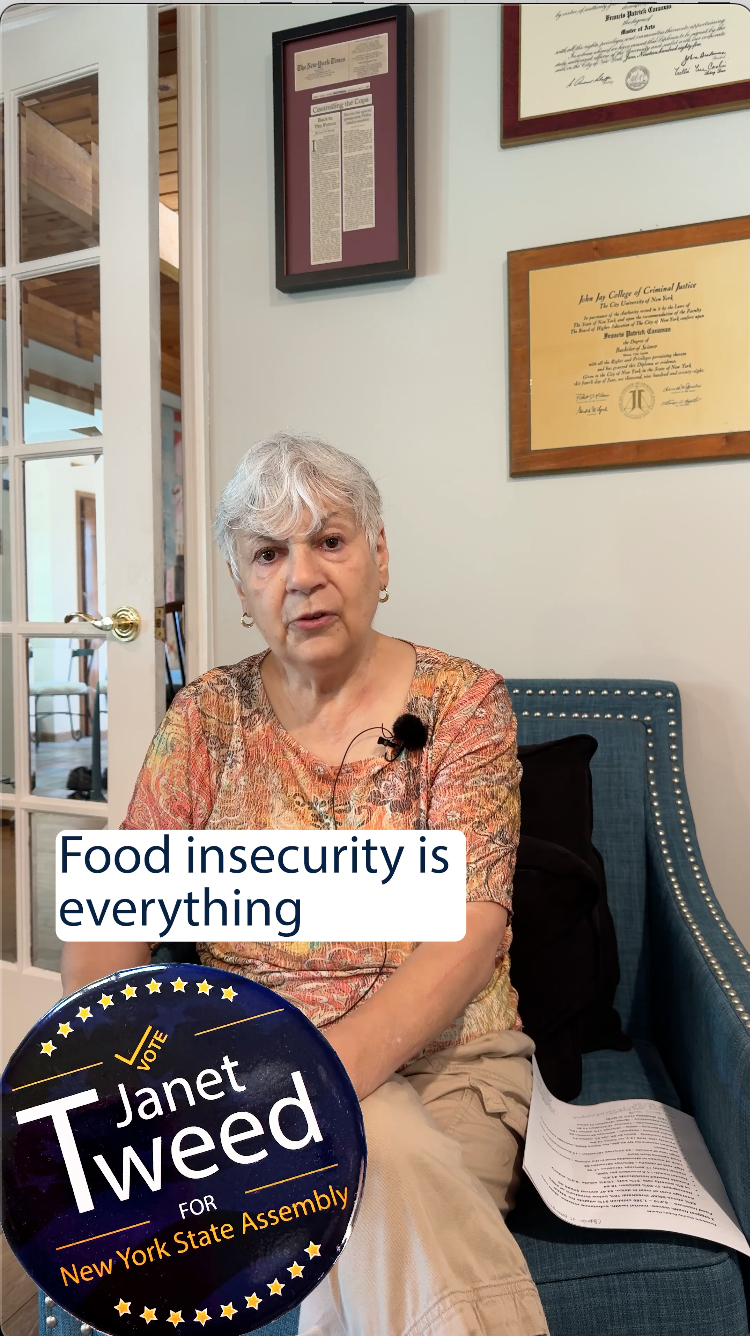
Agriculture is fundamental to our economy and our way of life in Upstate New York. I support strengthening our local food systems top-to-bottom, with policies like:
Leveraging New York’s purchasing power to buy from local producers, and encouraging schools to purchase whole milk – which puts more dollars into farmers’ pockets and fewer in middlemens’.
Continuing to support research, outreach, and educational programs that benefit farmers and New York food processors.
Encouraging and incentivizing farmers to adopt regenerative practices (such as planting cover crops, increasing agroforestry, and rotational grazing of livestock) that will protect long-term soil health and farm profitability. Where I live in Delhi, we are part of the New York City watershed. The Watershed Agricultural Council connects farmers with funding from the city to upgrade facilities and improve regenerative practices that protect natural resources and support growers. I support similar programs statewide.
Advancing agrivoltaics – co-location of solar power generation and agriculture – where feasible. A
id farmers, municipalities and solar developers to find win-win solutions that give growers a steady source of income, offer young farmers land access, and keep more of our land in agriculture.
In these and many other possibilities, I pledge to listen and work collaboratively with growers, farmworkers, organizations like the New York Farm Bureau, and other stakeholders.
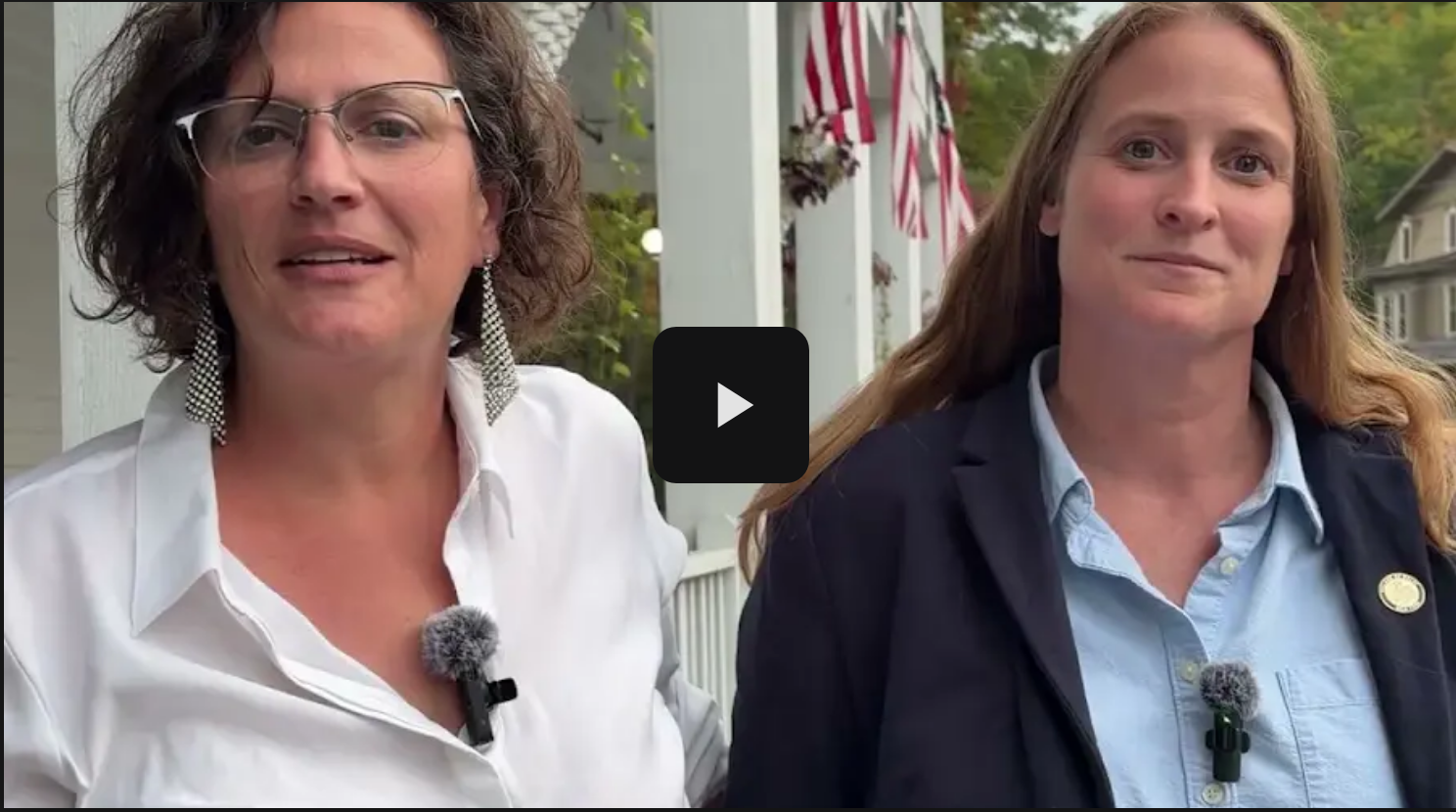
Watch farmers Jim Barber and Eleanor Blakeslee-Drain explain how universal healthcare would support their businesses, workers and families. -
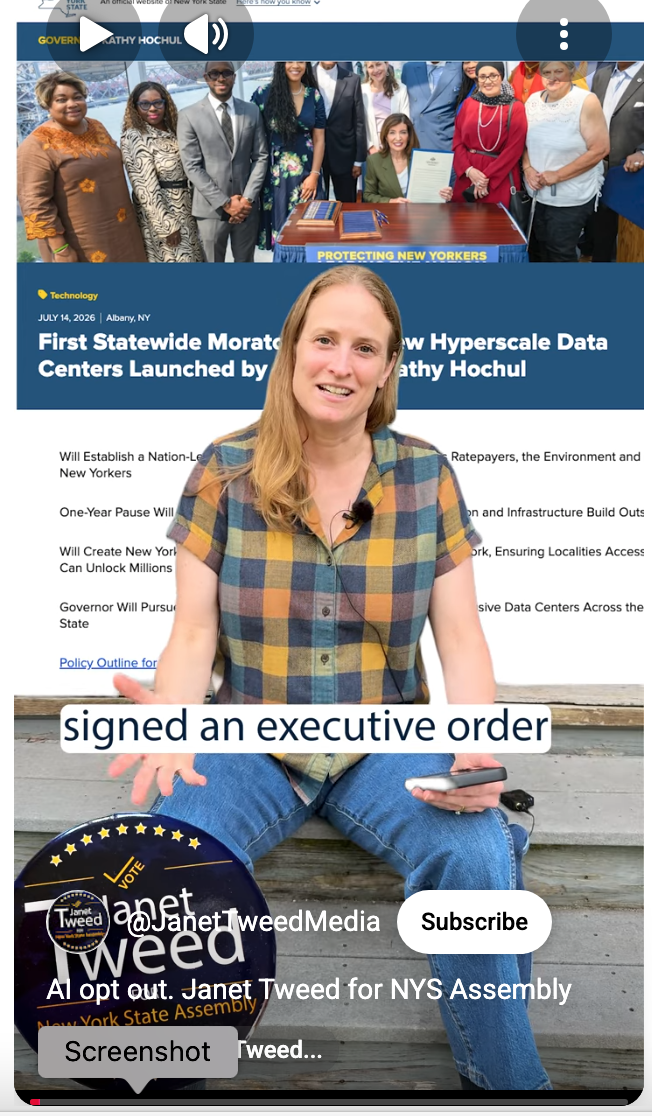
The massive growth of AI data centers is driving up energy prices, straining municipal infrastructure, and threatening our natural resources. But as I’ve talked with people of every political stripe across the district, many people do not need or want AI in their emails, web searches or social media. That's why I'm calling for legislation requiring tech companies to allow users to opt out of AI.
I also support the Responsible Data Center Development Act passed by the legislature – which would require data centers to pay to upgrade any municipal infrastructure they use – and I urge Governor Kathy Hochul to sign it into law.
Read more in my letter in the Albany Times Union.
-
Not only is renewable energy better for human health and the environment, it is better for our economy. We have seen just how quickly our economy can be held hostage by petro-states like Iran. Many states and countries are expanding renewable energy based on economic realities alone. China, for example, is now the global leader in building renewable energy. Texas has added more renewable capacity in the last two years than New York has added in the last 20. This should not be a partisan issue – South Dakota creates 80% of its energy from renewables. Renewable energy is greener, cheaper, and better for our national security.
Read more about my efforts to lower utility costs, support farmers, improve healthcare, and more in this interview with the Mountain Eagle.
-
Safe, adequate, affordable housing is fundamental to our individual and community wellbeing.
On the Delhi village board, I have worked hard to advance housing projects, update zoning, and collaborate with anyone who wants to address this issue. We need more housing of all types, especially in cities and villages where many people want to live and where municipal water and sewer systems allow greater density.
Some solutions:
Place strict limits on private equity firms that are buying up single-family homes, pricing out would-be homeowners, and then charging exorbitant rents.
Offer first-time homebuyer assistance.
Establish municipal housing banks. Many counties simply auction off properties that have been foreclosed. Instead, they could work with private developers or nonprofits to combine and redevelop those properties in ways that serve community housing needs.
Change zoning to enable people to build Accessory Dwelling Units on their properties (such as grandparent suites or apartments above a garage).
Support zoning and siting of pre-fabricated homes, which are much cheaper to build.
Aid municipalities who want to limit Airbnb rentals and other uses that make homes unavailable for full-time homeowners.
Read more about my ideas to address the housing crisis in the DC Digest.
-
In Upstate New York, we are lucky to live in a beautiful environment, but climate change is altering our weather patterns, threatening our agricultural community, and harming our ecosystems. Fortunately, there is a lot we can do.
Farmers need support to adopt regenerative practices, affordable homes need to be built that use less energy, and green transportation options need to be promoted.
Where I live, in Delhi, we are part of the New York City watershed and NYC provides considerable funding for farmers to adopt sustainable practices that protect the environment and save them money. We can adapt some of those principles statewide to support growers while protecting our environment.
-
From our youth to our seniors, reliable transportation can make the difference between opportunity and isolation. While personal vehicles will always be important in rural communities, they should not be the only option.
We should work with state, regional, and local partners to expand practical transportation throughout our district. Whether it's better bus service, passenger rail, safe places to walk and bike, or a combination of transportation options, we should expand the choices available to residents. Reliable connections to schools, hospitals, downtowns, and major employers can improve quality of life while strengthening our local economy.
Better regional connections to Albany, the airport, and New York City can also create new opportunities. They can help residents access education, employment, and specialized health care while making our communities more accessible to visitors. Expanding transportation options can support tourism, help local businesses reach new customers, and make it easier for families to stay connected. Better transportation can create the kinds of opportunities that encourage young people to build their futures here rather than feeling they have to leave. -
Unions built the middle class. They gave us weekends, sick time, and paid holidays. Unions help working people to reclaim some of the benefits of economic growth, rather than letting all growth be captured by those at the very top of the income ladder. The data is so overwhelming: Union members enjoy a wage premium of almost 13% over non-unionized workers.
Unions reduce income inequality by negotiating higher wages for workers, and by establishing higher pay standards that benefit non-union workers in the same region or industry. The decline in union membership across the U.S. since 1979 directly correlates to an increase in income inequality. Unions serve as a critical check and balance on greed and corporate power. I support the rights of workers to organize and I oppose tactics by employers to interfere with unions.
“If we want strong, healthy rural communities, we need a voice in Albany who answers to us — not corporations or career politicians.”